Atchison, Kansas · Tuckpointing & Repointing
Tuck Pointing Services in Atchison, KS
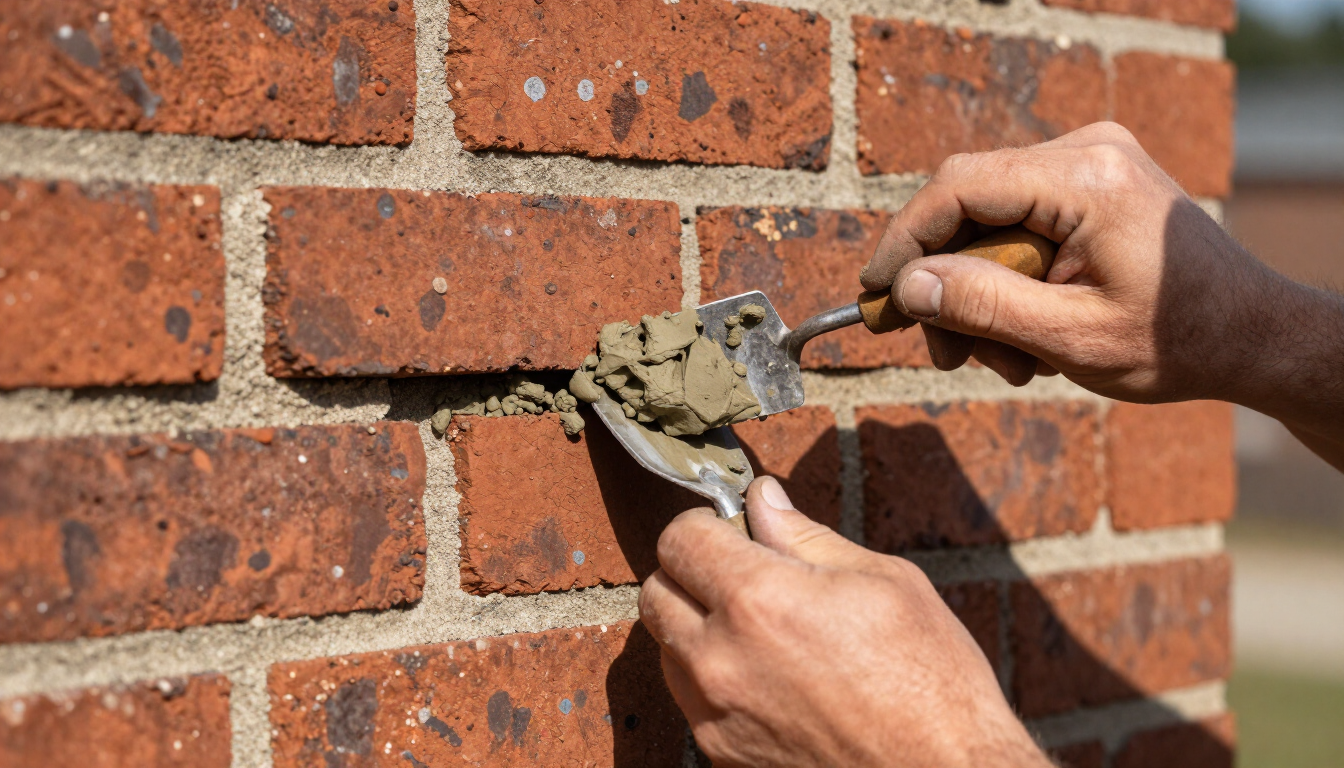
Tuckpointing, also called repointing, is a precision masonry repair that restores both the appearance and the water resistance of brick and stone walls. We use mortar mixes matched to existing masonry and tooling techniques tailored to preserve historic character while providing modern durability.
WHY IT MATTERS
Your Mortar Joints Are the First Line of Defense
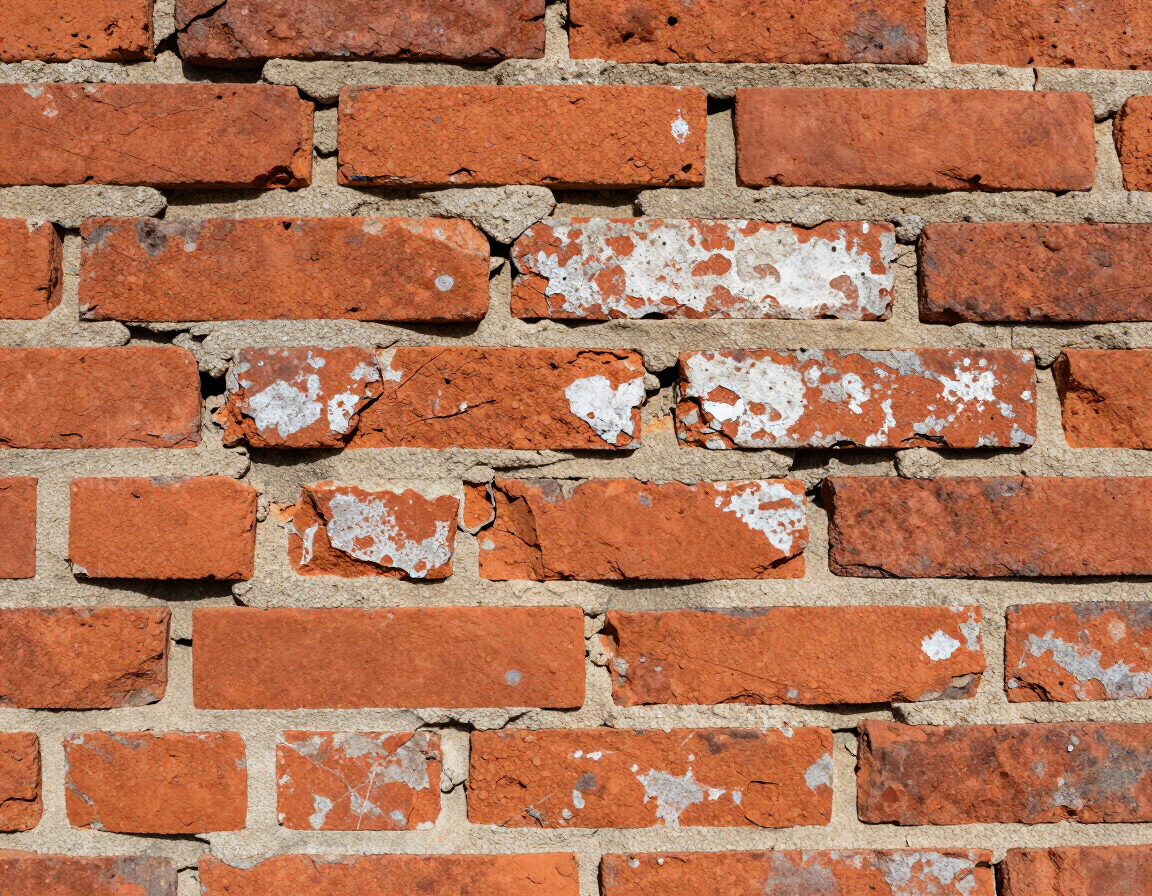
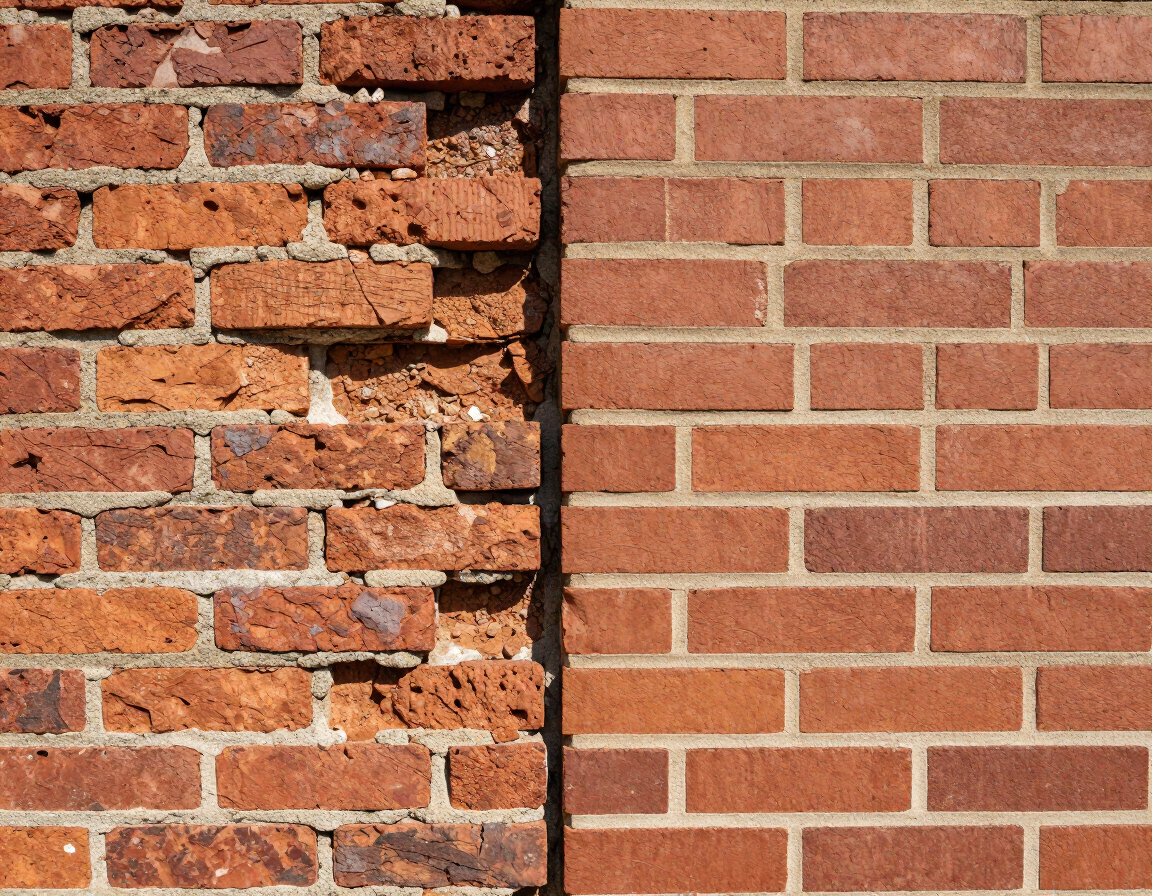
Mortar joints are the first line of defense against moisture, wind-driven rain, and temperature cycling. Over time, mortar deteriorates from weather, vibration, and chemical attack. When it fails, water infiltrates the wall, causing freeze-thaw damage, corroded metals, crumbled joints, and compromised brick faces.
Tuckpointing arrests this by removing deteriorated mortar and replacing it with a compatible, well-tooled joint that repels moisture while letting the wall breathe.
Matched Mortar Composition — lime vs. Portland ratios selected to suit the original masonry's softness and vapor movement.
Built for Atchison's Climate — freeze-thaw-resistant mixes and joint profiles that shed seasonal moisture.
When to Call Us
5 Signs Your Walls Need Tuckpointing
If you notice any of these warning signs, schedule an inspection before deterioration accelerates.
Crumbling Mortar — mortar that rubs out or crumbles when scratched with a key or fingernail.
Wide Joints — joints wider than ¼ inch that no longer shed water effectively.
Efflorescence — white crystalline deposits on the brick face indicating moisture migration.
Visible Voids — gaps and open voids in mortar joints visible to the naked eye.
Interior Dampness — water staining or dampness on interior walls adjacent to masonry.
The Advantages
Why Professional Tuckpointing Pays Off
Restored Water Resistance
Stops moisture infiltration through joints and reduces interior moisture issues.
Enhanced Appearance
Renews joint lines and mortar color for a clean, uniform look.
Prevents Further Spalling
Addresses root causes before moisture destroys brick faces.
Extends Wall Life
Delays or eliminates the need for full wall reconstruction.
Improved Thermal Performance
Seals drafts through failed joints for marginal thermal gain.
How We Work
Our 6-Step Tuckpointing Process
Every tuckpointing project follows a disciplined sequence — from joint diagnosis to final cure — so the mortar we place lasts decades, not years.
01
Diagnostic Evaluation
Inspect joint depth, mortar composition, brick condition, and underlying issues like efflorescence or rising damp.
02
Test Patches & Mortar Analysis
Ensure color match and determine lime vs. Portland content for a compatible mortar.
03
Controlled Mortar Removal
Remove to correct depth with hand tools or low-impact grinders without damaging brick faces.
04
Correct Mortar Selection & Mixing
Breathable mixes suited to the masonry, mixed in small on-site batches.
05
Repointing & Tooling
Place and compact mortar, then tool to match the original profile (concave, flush, struck, weathered).
06
Cleaning & Completion
Clean joints after curing; protect work from premature rain or freezing.
Tuckpointing vs. Rebuild
Knowing When to Repoint — and When to Rebuild
Tuckpointing suits walls where mortar has deteriorated but the bricks and bond remain sound. When brick units are spalled or cracked, or when significant wall movement has occurred, partial rebuilding may be needed — our diagnostic process determines the scope.
Matching mortar strength and permeability is critical: high-strength cement mortar on soft historic brick traps moisture and accelerates decay.
Historic Downtown Building
Matched lime-based mortar and repointed the facade, eliminating interior leaks and preserving detailing for adaptive reuse.
Residential Brick Porch
Repointing restored joint color and stopped moisture migrating into the ledger and framing.
Church Steeple Restoration
Specialist tuckpointing preserved ornamental profiles against heavy wind and rain.
With correct materials and execution, repointing can last 20–50 years. Inspect every 5–10 years, especially after severe freeze-thaw seasons.
COMMON QUESTIONS
Tuck Pointing FAQs
Is tuckpointing the same as stuccoing?
No. Tuckpointing replaces recessed mortar joints in brick or stone, whereas stucco (parging) is a protective cement or lime coating applied over masonry or wood sheathing.
Can tuckpointing change the look of my brick?
When done correctly, tuckpointing restores the original look. We match mortar color and joint profiles to maintain aesthetic continuity.
How long before I can paint or seal after tuckpointing?
Painted finishes or sealers should wait until mortar has fully cured, usually several weeks depending on temperature and humidity. We provide specific post-work guidance.
Will tuckpointing stop all moisture problems?
Tuckpointing addresses moisture ingress through joints. However, if the underlying problem is failing flashing, poor drainage, or rising damp, those issues must be fixed in addition to tuckpointing.
Is cement-based mortar always better?
Not always. Cement-based mortar may be too rigid for older, softer bricks. Lime-based mortars often provide the correct flexibility and breathability for historic masonry.
PROTECT YOUR INVESTMENT WITH EXPERT TUCKPOINTING
Protect your investment with professional tuckpointing from Old School Masonry. Call (913) 426-3663 to schedule an assessment and receive an accurate, itemized estimate. Let us restore the functionality and appearance of your masonry with a solution built to last.